

Patching Subwoofers - A Step-by-Step Guide for Using an Aux or Matrix Depending On Your Application

Dan Nagle • February 8, 2023

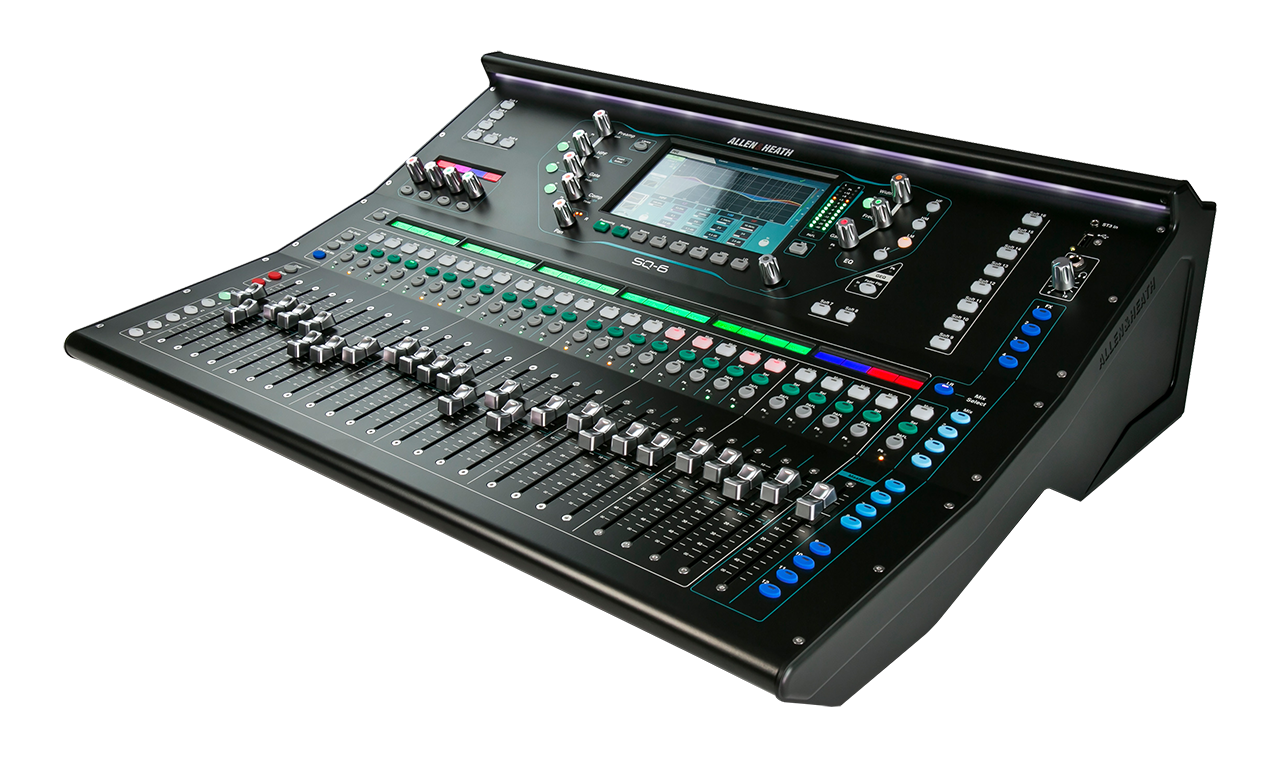
Patching Subwoofers - Allen & Heath SQ-5, SQ-6, or SQ-7 console

Setting up a subwoofer on a matrix or aux output on the Allen & Heath SQ-5 console is fairly simple but you want to make sure you're setting up your sub the way you need it to work. See the FAQs to the right (below on mobile) to determine which patch is right for you.


Here's a step-by-step guide to assist you:


Setting up a Subwoofer on a Matrix Output


1. Select a Matrix: From the main screen, tap on the 'Setup' button and then select 'Matrix'. Decide on which Matrix you want to assign the subwoofer to. You'll see the available matrices (MTX 1-8).


2. Assign Inputs to Matrix: After selecting the desired matrix, assign the required input channels to it. These will usually be your main left and right outputs. To do this, tap on the 'Sends' tab under the selected matrix.


3. Adjust Levels: Adjust the level of these sends according to your requirements.


4. Connect to Subwoofer: Now, connect the output of the selected matrix to your subwoofer.


5. Configure EQ: Finally, you can configure the EQ for the matrix output to suit the subwoofer's frequency range. This can be done through the 'PEQ' tab in the Matrix setup.


Setting up a Subwoofer on an Aux Output


1. Select an Aux: From the main screen, tap on the 'Setup' button and then select 'Mix'. Decide on which Aux you want to assign the subwoofer to. You'll see the available Aux outputs (Mix 1-12).


2. Assign Inputs to Aux: After selecting the desired Aux, assign the required input channels to it. These will usually be your main left and right outputs. To do this, tap on the 'Sends' tab under the selected Aux.


3. Adjust Levels: Adjust the level of these sends according to your requirements.


4. Connect to Subwoofer: Now, connect the output of the selected Aux to your subwoofer.


5. Configure EQ: Finally, you can configure the EQ for the Aux output to suit the subwoofer's frequency range. This can be done through the 'PEQ' tab in the Mix setup.


Remember to always check the manufacturer's manual or guidelines for your specific subwoofer for any specific settings or precautions that should be taken into consideration while connecting and configuring the system.
  • Why use a matrix to feed your subwoofer(s)?

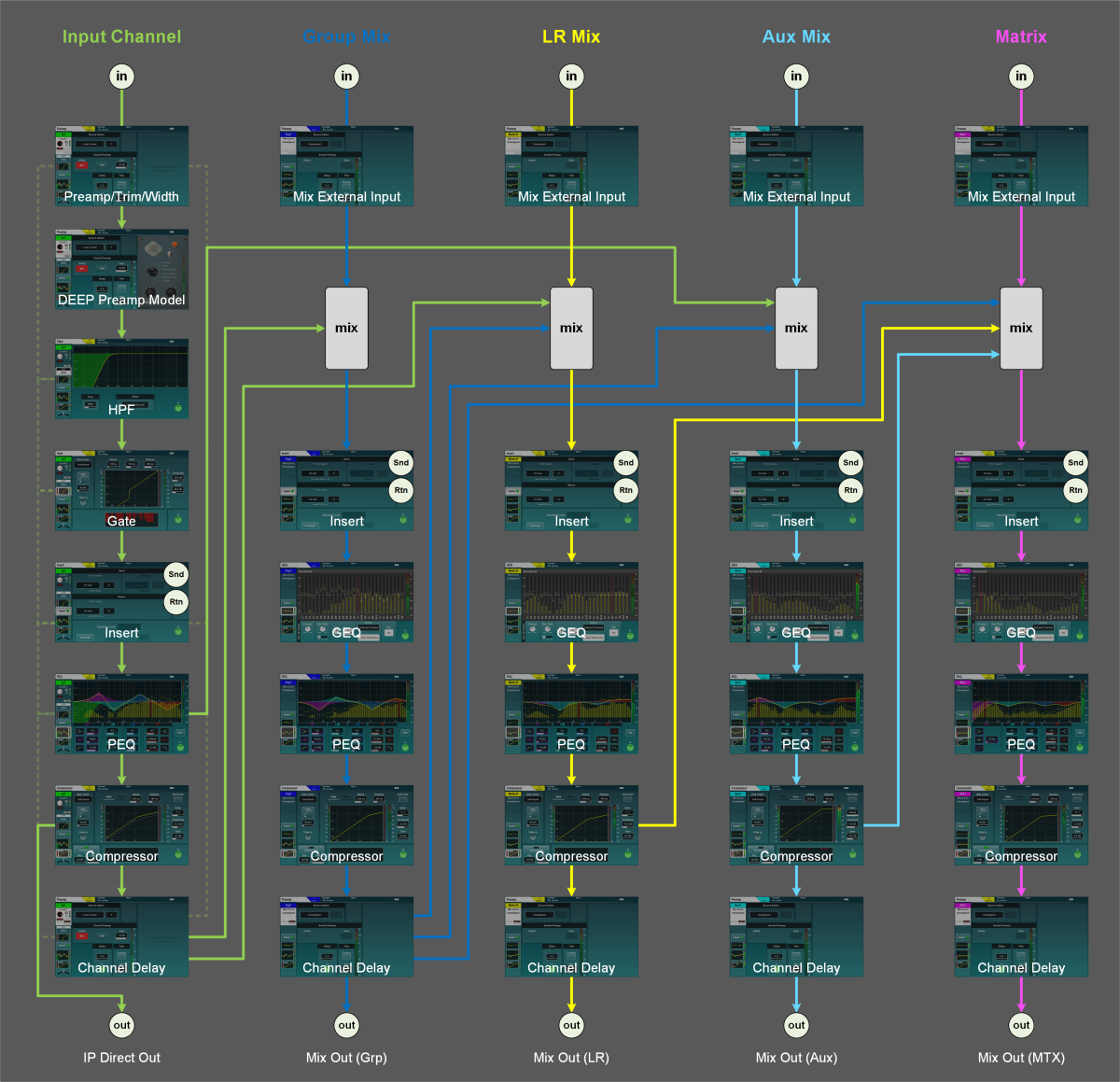
    A matrix output is used when you want to create a mix that is based on your main Left/Right (L/R) mix but has some level of independence. In the context of a subwoofer, you might use a matrix output if you want your sub to primarily follow the main L/R mix, but also want the ability to tweak the sub level independently.

  • What are the benefits of a matrix feeding subwoofers?

    Independence and Control:

    A matrix output allows you to have an independent level control for the subwoofer, which can be adjusted separately from the main mix.


    Flexibility:

    You can add additional inputs into a matrix mix, so if you have specific channels that need to be sent to the subwoofer in addition to the main mix, a matrix output provides this flexibility.


    Consistency:

    Since a matrix is typically derived from the main L/R mix, changes to the mix (such as EQ, dynamics, or effects) will be reflected in the matrix. This ensures consistency between the main mix and the subwoofer feed.

  • Why use an aux (aka mix or monitor) patch to feed your subwoofer(s)?

    An auxiliary (Aux) output is often used when you want full control over what gets sent to the subwoofer, separate from the main L/R mix. By routing to an Aux, you can choose specific channels to send to the subwoofer, rather than simply deriving it from the main mix.

  • What are the benefits of an aux (aka mix or monitor) patch feeding subwoofers?

    Full Control: An Aux feed gives you complete control over the mix that's sent to the subwoofer. You can send any combination of channels to the Aux, with independent level control for each.


    Tailored Sound: Since you're creating a separate mix for the subwoofer, you can tailor the sound specifically for the sub's frequency range. This might involve sending only the channels with significant low-frequency content to the subwoofer.


    Avoidance of Phase Issues: By carefully choosing which channels are sent to the subwoofer, you can avoid potential phase issues between the subwoofer and main speakers, which can arise when the same signal is sent to both.

  • How should I patch subwoofers in my audio console? Matrix or Aux?

    Matrix and Aux outputs provide two different ways to patch your subwoofers. Here are the main use cases for each patch type.


    Matrix Output

    Patch your subwoofer to a matrix output if you want your sub to primarily follow your main Left/Right mix, with some independence. Matrix is especially useful when you need:

    • An independent level control for the subwoofer, separate from the main mix.
    • To add specific channels to the subwoofer feed in addition to the main mix.
    • Consistency between changes to the main mix (such as EQ, dynamics, or effects) and the subwoofer feed.

    Aux/Mix/Mon Output

    Patch your subwoofer to an Aux output if you want full control over what gets sent to the subwoofer, separate from the main Left/Right mix. An Aux is especially useful when you need:

    • Complete control over the mix that's sent to the subwoofer, allowing any combination of channels to be sent with independent level control for each.
    • To tailor the sound specifically for the subwoofer's frequency range, such as sending only channels with significant low-frequency content.
    • To avoid potential phase issues between the subwoofer and main speakers, which can arise when the same signal is sent to both.

    In conclusion, your choice depends on the level of control and flexibility you need over your subwoofer feed. Both Matrix and Aux outputs have their own advantages and are beneficial in different situations.

November 5, 2025
It’s tech week. Your show is built. You’ve got cues for the main PA, for the on-stage monitors, for the subs, and for the lobby speakers. You plug in your trusty 8-output USB audio interface, open your cueing software—be it QLab, Show Cue Systems (SCS) , Canvas , Multitracks Playback , or even OBS for video—and... it only sees two outputs. "Speakers (L/R)". You're losing time, the director is asking to hear the cue again, and you just need it to work. Don't panic. This is one of the most common and frustrating problems in pro audio, and the fix is almost always the same. Your hardware is not broken. The problem is your drivers and configuration. This guide will walk you through the fix for both Windows and MacOS . For MacOS Users (QLab): The Answer is Audio MIDI Setup
November 3, 2025
The way we watch movies is changing. Audiences are increasingly skipping the traditional big-box cinema, looking for a unique experience without the sticky floors and high-priced junk food. This shift has sparked a boom in pop-up screenings, from outdoor film festivals and municipal "movie in the park" nights to live theatres using their off-seasons to generate new revenue. No matter the venue or the season, the challenge for all these groups is the same: sourcing projection that is portable, bright enough to compete with ambient light, and delivers the stunning 4K experience audiences now expect.
October 16, 2025
This year's "Mission Impossible" Award goes to an individual who defied the odds, who stared down technical nightmares and emerged victorious. Their ingenuity transformed what seemed impossible into a breathtaking reality... 
More Posts