
Compressing Your Stream or Media Recording: When to Use H.264 and H.265

Dan Nagle • July 25, 2023

When to Use H.264 vs H.265

In the ever-evolving world of video encoding, two codecs reign supreme: H.264 (also known as AVC) and H.265 (HEVC or High Efficiency Video Coding). Both are instrumental in recording, compressing, and distributing video content, yet each offers different benefits and drawbacks. In this blog post, we'll delve into the specifics of each codec and help you understand when to use H.264 and when to opt for H.265.


The Role of Video Codecs


Video codecs play an integral role in the media industry. Their primary function is to compress raw video footage to a more manageable size, making it easier to store and distribute. The level of compression can significantly influence the quality of the final product, which is why choosing the right codec is so crucial.


H.264: The Reliable Standard


Introduced in 2003, H.264, or Advanced Video Coding (AVC), has been the industry standard for video compression for nearly two decades. H.264 is universally compatible with virtually all devices that play video, making it a safe choice for content distribution. 


The H.264 codec offers excellent video quality, even at lower bit rates, making it ideal for streaming over the internet, especially where bandwidth is a concern. If you're streaming live video, such as a webinar or online gaming session, or if you're targeting platforms or devices with known compatibility issues, H.264 remains the go-to codec.


H.265: The High-Efficiency Option


H.265, also known as High Efficiency Video Coding (HEVC), was designed to improve upon its predecessor. It was introduced in 2013 with the goal of providing the same video quality as H.264 but at half the bit rate. The result is high-quality video that uses less bandwidth and storage.


The trade-off, however, is that H.265 is more processor-intensive, which means it can put more strain on the device decoding the video. As such, older devices or those with weaker processors may struggle to play H.265 content smoothly.


That being said, H.265 is becoming increasingly prevalent, especially in scenarios where video quality is paramount, and storage or bandwidth is limited. For instance, H.265 is the codec of choice for 4K streaming, as it can efficiently handle the large file sizes. Moreover, as devices become more powerful, the adoption of H.265 is likely to continue to rise.


Making the Choice: H.264 vs. H.265


When deciding between H.264 and H.265, consider the following factors:


  • Compatibility
  • If broad compatibility across various devices is a top priority, H.264 is the safer choice.
  • Video Quality
  • For premium video quality, especially with 4K content, H.265 offers better compression without sacrificing quality.
  • Processing Power
  • Remember that H.265 requires more processing power to decode. Make sure your target devices can handle it before opting for this codec.
  • Bandwidth and Storage
  • If bandwidth or storage is a concern, the higher efficiency of H.265 could provide substantial benefits.


In conclusion, the decision between H.264 and H.265 largely depends on your specific needs and the resources at your disposal. As technology continues to advance, we can expect to see even more efficient codecs in the future, making video streaming and recording even more accessible and high-quality. Until then, understanding the pros and cons of H.264 and H.265 will ensure you make the best decision for your video encoding needs.

  • What are video codecs?

    Video codecs are software or hardware that compresses (encodes) or decompresses (decodes) digital video. They help reduce the file size of video data, making it more manageable for storage and distribution.

  • What is H.264 and what is it used for?

    H.264, also known as Advanced Video Coding (AVC), is a popular video codec. It's commonly used for recording, compressing, and distributing video content. Due to its broad compatibility, it's widely used in video streaming over the internet and for playback on various devices.

  • What are the main advantages of H.264?

    H.264 offers excellent video quality even at lower bit rates. It's compatible with virtually all devices that play video, which makes it a reliable and safe choice for content distribution, especially for live streaming and platforms with compatibility issues.

  • What is H.265 and what is it used for?

    H.265, or High Efficiency Video Coding (HEVC), is a video codec designed to provide the same quality as H.264 but at half the bit rate. It's used in scenarios where video quality is paramount, and storage or bandwidth is limited, such as 4K streaming.

  • What are the main advantages of H.265?

    The key advantage of H.265 is its efficiency. It provides high-quality video using less bandwidth and storage compared to H.264. However, decoding H.265 content requires more processing power, which could be a problem for older or less powerful devices.

  • Should I use H.264 or H.265 for live streaming?

    If compatibility and lower processing requirements are your top priorities, then H.264 would be a safer choice. However, if you're streaming high-quality content and bandwidth is a concern, H.265 might be more suitable due to its higher compression efficiency.

  • Is H.265 better than H.264 for 4K streaming?

    Yes, for 4K streaming, H.265 is generally better because it provides the same video quality as H.264 but uses less bandwidth and storage. This is crucial for 4K content as it typically involves large file sizes.

  • Can all devices play H.265 encoded videos smoothly?

    No, not all devices can smoothly play H.265 content. Older devices or those with weaker processors might struggle due to the higher processing power required to decode H.265 content.

  • Will H.264 become obsolete?

    As of now, H.264 continues to be widely used because of its broad compatibility and lower decoding requirements. While H.265 and other new codecs offer certain advantages, the transition will likely be gradual.

  • Are there any other codecs I should consider apart from H.264 and H.265?

    There are other codecs such as VP9 and AV1, which are also worth considering. VP9, developed by Google, offers a similar level of compression efficiency as H.265 but with fewer patent licensing issues. AV1 is a newer codec that promises even better compression than H.265 and VP9, and it's free to use. However, these codecs might not be as widely supported as H.264 or H.265.

November 5, 2025
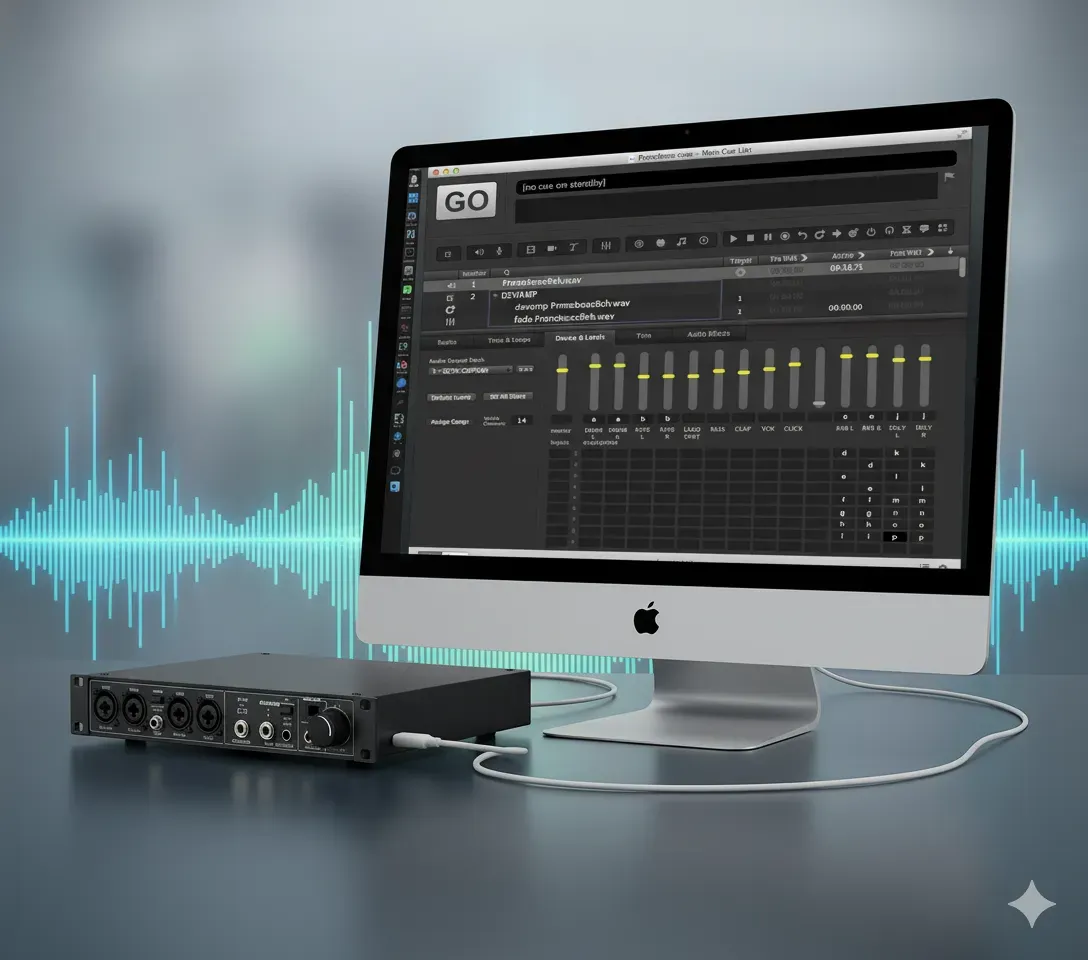
It’s tech week. Your show is built. You’ve got cues for the main PA, for the on-stage monitors, for the subs, and for the lobby speakers. You plug in your trusty 8-output USB audio interface, open your cueing software—be it QLab, Show Cue Systems (SCS) , Canvas , Multitracks Playback , or even OBS for video—and... it only sees two outputs. "Speakers (L/R)". You're losing time, the director is asking to hear the cue again, and you just need it to work. Don't panic. This is one of the most common and frustrating problems in pro audio, and the fix is almost always the same. Your hardware is not broken. The problem is your drivers and configuration. This guide will walk you through the fix for both Windows and MacOS . For MacOS Users (QLab): The Answer is Audio MIDI Setup
November 3, 2025
The way we watch movies is changing. Audiences are increasingly skipping the traditional big-box cinema, looking for a unique experience without the sticky floors and high-priced junk food. This shift has sparked a boom in pop-up screenings, from outdoor film festivals and municipal "movie in the park" nights to live theatres using their off-seasons to generate new revenue. No matter the venue or the season, the challenge for all these groups is the same: sourcing projection that is portable, bright enough to compete with ambient light, and delivers the stunning 4K experience audiences now expect.
October 16, 2025
This year's "Mission Impossible" Award goes to an individual who defied the odds, who stared down technical nightmares and emerged victorious. Their ingenuity transformed what seemed impossible into a breathtaking reality... 
More Posts